
By: Community Officer Jeff Kirchman
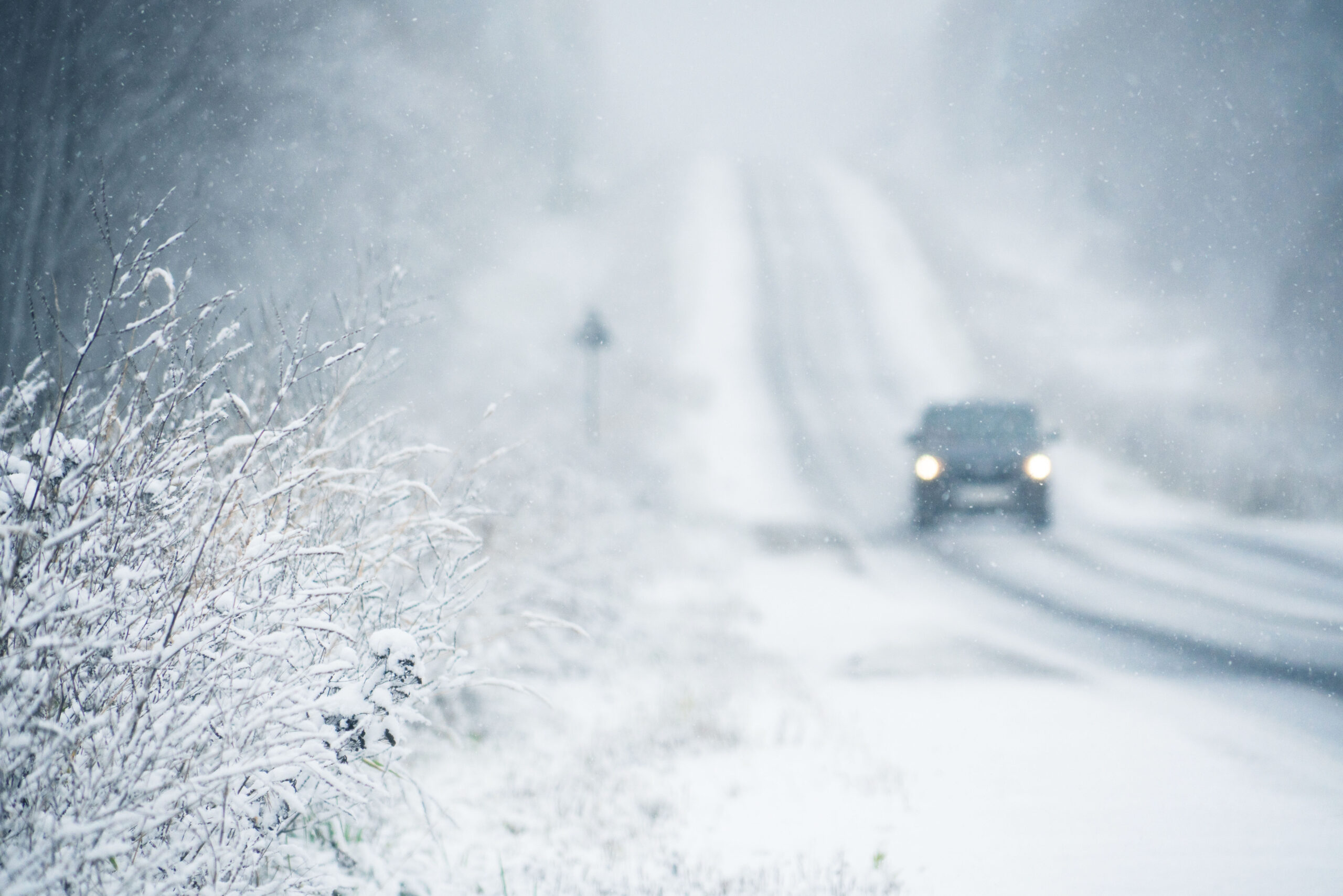 In my regular role as the University Apartments community police officer, I often meet new residents experiencing their first Wisconsin winter. Many come from climates where they get little to no experience with snow, ice, and extreme cold. To help them, I began giving an annual Winter Safety & Preparation presentation.
A key component of that presentation is discussing safe winter driving habits. Here are some top tips I share, based on decades of experience as a police officer, as well as a near-lifetime Badger braving wintry Wisconsin weather.
Do Nothing Fast
Perhaps THE most important tip. Accelerate slowly. Brake slowly, turn slowly. Here’s the best advice I’ve ever heard for driving in cold and slippery conditions, courtesy of weather broadcaster Chad Sullivan of WBTV in Charlotte, North Carolina:
“Just pretend you’re taking your grandma to church. There’s a platter of biscuits and 2 gallons of sweet tea in glass jars in the back seat. She’s wearing a new dress and holding a crock pot full of gravy.”
Beware of Black Ice
Black ice is a thin, nearly invisible layer of ice that can form on roadways in certain conditions. It’s hard to see and harder to drive on. News outlets report black ice conditions and inform you of areas where black ice may be likely to occur. If you learn of black ice conditions in some areas, drive as if it’s going to be found in all areas.
Increase Space
The normal dry pavement following distance of three to four seconds should be increased to eight to ten seconds. This increased margin of safety will provide the longer distance needed if you have to – slowly – stop or make avoidance maneuvers.
Know Your Brakes
In a safe area, practice ‘threshold braking’. Keep your heel on the floor and use the ball of your foot to apply firm, steady pressure on the brake pedal to the point just before the antilock braking system (ABS) activates, or your tires begin sliding.
Climb and Descend Hills with Control
Spinning tires have virtually no traction. To climb a slippery hill, gain inertia on the flatter lead-up and let that momentum carry you to the top as much as possible. Then reduce speed by decelerating and/or braking slowly to control your descent.
Stay home.
If you really don’t have to go out, don’t. Even if you can drive well in the snow, not everyone else can. If you don’t have somewhere you have to be, watch the snow from indoors or safely play outside in it, at home.
We cover a lot more in my yearly Winter Safety & Preparation presentation. If you know of a group that could benefit from some winter safety education, contact me directly or reach out to UWPD at police@uwpd.wisc.edu.