
By: Law Enforcement Dispatcher KC Torgerson
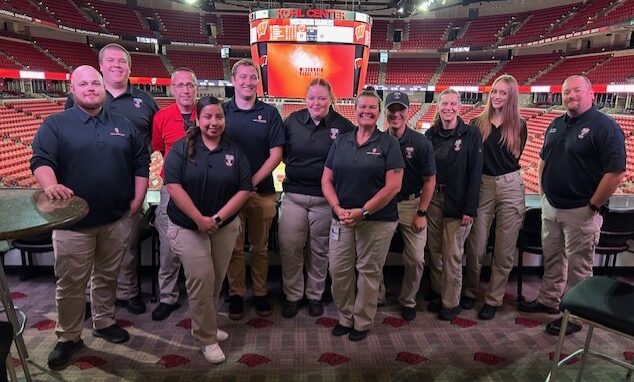
At the UW-Madison Police Department, we have 10 Law Enforcement Dispatchers (LEDs) who participate in ongoing training to ensure they are ready for you, whether answering routine calls for service or coordinating during a critical incident. Training is critical for new dispatchers, but it remains a priority throughout an LED’s career. In the world of public safety, no one remains complacent, and there is a constant striving to be better equipped to handle emergencies.
It is crucial to build the muscle memory needed for an active response, so that in the moments where it counts, regardless of the stress and chaos, dispatchers can remain calm and carry out their job duties. After the preliminary months of learning the ropes, dispatchers at UWPD continue to hone their skills and learn new ones. They do this through resources such as online certifications, collaborative seminars with other branches of public safety, and team coaching with personal instruction from dispatch leadership.
Online Training
Every month, each dispatcher completes test calls using ThisGen Training Software. ThisGen creates practice 911 calls with a variety of scenarios and caller types. The program adapts to the dispatcher’s tone and line of questioning, helping us test run our call taking through incidents such as kidnapping, burglary, active assault, attempts to self-harm, and other dangerous scenarios. This is a good example of training muscle memory—getting into a cadence of asking questions and gathering information. Professional organizations also provide invaluable training resources to public safety telecommunicators, including courses on active shooter incidents, crisis negotiations, mental health-related calls, disaster operations, and so much more. Dispatchers can continue to build on foundational knowledge to increase their effectiveness by completing certifications and online training courses.
Collaborative Seminars
Many branches and agencies of public safety combine their expertise to offer training to the broader public, rather than individual departments. WIPSCOM, for example, is a collaboration between the Wisconsin chapters of the Association of Public Safety Communication Officials and the National Emergency Number Association. Throughout Wisconsin, dispatchers and leadership gather to share knowledge, learn new skills, and build professional connections. Recently, Madison Fire hosted an Active Shooter training, where the fire department, EMS, police, and dispatch gathered for tabletop exercises and role-playing.
Team Coaching
In addition to external training, in-house campus-specific training is provided regularly through quality assurance checks, building tours, tabletop exercises, presentations, and monthly training reviews on topics such as HAZMAT incidents, major power outages, and emotional intelligence. We also train with our Lake Rescue team, Infrastructure Security team, and Police and Security officers.
All of these training efforts ensure the Law Enforcement Dispatchers serving the campus community are ready to help our students, staff, and visitors 24 hours a day, seven days a week!